State of Sociotype 2025
Intro
Information society and differential psychology
In differential psychology, the goal is to deduce as much as possible about a person's motivations, behavior, values, physiology, relationship compatibility, and potential success in various professional fields using minimal information. What, in essence, resembles the aspirations of a data-driven world.
One of the starting points of the information society began with people hiding information from others. When you simply hide something in a place unknown to someone else, there is always a chance that the place will be discovered, and your secrets will be revealed. Moreover, if you take no additional measures, you might not even know that someone else has uncovered your secrets. To prevent such situations, you must either have no secrets at all or make your secrets such that when someone else learns them, they gain no advantage. This is the foundation of all security in the world.
Today, the most critical asset is information, how it is formed, how it flows, how it spreads. And the person who understands how information works, and who controls it is effectively the gray cardinal of society.
At the core of theories about how information is structured in the world, there's a principle: the more you can convey using fewer words, the more valuable it becomes. If we equate words to bits, we can say that the fewer bits you use to express an idea, the greater its value. This allows you to store it in a smaller safe compared to having a massive amount of information. If there's a body of information and I can devise a better way to compress it than you can, I have the advantage - my algorithm will have lower complexity. And the drive to reduce algorithmic complexity of information is a fundamental goal in many fields.
If we add biological limits, and consider the idea that, due to human physiology and the limitations of the current state of brain development, there is a physiological limit to the number of stable social connections a person can maintain , the emergence of a direction like socionics as a discipline in the information society, in one form or another, was inevitable - as a need to represent everything in the form of maximally compact structures, including human psyche, relationships, bio-societal dynamics, and others. There are other factors driving this as well as we need to systematize and pass on knowledge, and also purely pragmatic-rational dimension – you don't start interacting with every new person by learning a new language from scratch. You already have some set of standardized tools and concepts that have been learned in advance, which help you interact more efficiently with the world and people.
Modern socionics, quantitative approach
In socionics (especially true for the approach we consider), instead of studying each of the 8 billion individuals separately, we distill those to the optimal cognitive number limit, by finding general patterns and correlations on different levels of personalities and packing everything into a structured system. Standard socionics started with 16 discrete types, which were qualitatively developed over several decades through the efforts and observations of many people and represented distinct and broad personality archetypes (which are still being refined today). This foundation allowed for further advancement.
In recent times, a significant problem in pop psychology, of which classic socionics is a part, has been the growing number of branches and schools that continue to multiply and diverge from each other, despite attempting to represent almost the same framework for understanding of the same subject. This created a demand for adopting an approach and methodology that would prevent moving in circles, and instead use all these branches in a more constructive way - as leverage and fuel for the benefit of a new meta-system.
By using modern technology and statistical methods, it has become possible to quantitatively extract 16 consistent and denoised intersections of global-type images, allowing for more scientific and mathematical folding and analysis.
The essence of scientific statistical approach in socionics was pioneered by works of Viktor Talanov, who laid the foundation for it. And which is the important part in this application.
The good part is that the approach, while giving clarity and simplicity on top of high scientific rigor, still does not go against any of the existing (or upcoming) alternative developments in this field. Additionally, allowing the construction of new higher-level frameworks on top of it.
Compared to theories of personality that address philosophical questions of value and the subjective complexities of human existence, the biological and psychometric approaches rely more heavily on scientific methods. These methods include experiments, precise measurement, and the use of reliable and valid tools to quantify personality and psychological characteristics, yielding evidence-based findings, helping fill gaps in traditional psychology, which is criticized - often with good reason - for its lack of scientific character and the conceptual clarity of a unified science. The goal is to develop measurements in psychology that are both reliable (produces consistent results across multiple instances) and valid (ensures that the measurement truly assesses what it claims to measure).
Knowledge-first, evidence-led models
The overarching aim of scientific inquiry is to understand, predict, and control phenomena. Much of what we know about personality and psyche from a scientific standpoint has developed in a largely atheoretical manner. Rather than emerging from a preexisting theoretical model, most scientific understanding of this area and insights have arisen from statistically rigorous observations and empirical findings.
All existing models in classic socionics are conditional schemes that try to integrate functions into a cohesive system. However, none of them has ever been proven, nor has any been experimentally verified or validated through research. And it's not very realistic to assume that in such purely hypothetical way any model can be developed to an adequate level of accuracy. Therefore, a more rational approach might be to selectively retain only the parts that work, and then build scientific models based on empirical data, experiments, and observations.
This is how modern socionics can operate and be more robust - not on the wheels of artificially constructed speculative models, but through its ability to predict new experimental facts and the objective world.
New focus
Dichotomy as a more important element of the system
Until more fundamental patterns emerge, dichotomies serve as a clear, unambiguous, and most convenient component of this framework, from which we can derive everything else, including functions, types, small groups - in the most straightforward way. Which also aligns closely with modern scientific frameworks, and with more fundamental ideas, such as potential difference and homeostasis.
Test
The current state
As of the beginning of 2025, the website provided one of the most accurate, efficient and differentiated personality measurement instrument available on the internet in the field of personality and differential psychology.
The application has a fairly simple appearance, which might unintentionally give users the impression that it's just as simple on the inside. Also because it is:
- free,
- completely transparent,
- requiring no registration,
- starting the test takes just 1 second and a single button click, with no limits, for anyone.
However, thanks to modern technologies, it's possible to create simple and functional interfaces that pack considerable hidden complexity internally.
The questions themselves are public access. The initial bulk of them was derived from Talanov's questionnaires. Then consequently filtered and supplemented to define a set of phrases that most comprehensively and concisely captures the variation in human personality, and processed in other ways, then on top of them testing logic and other parts were implemented.
Underlying mechanism
In the interval between the user pressing the purple button and the start of the actual test, the generation process takes place. It iterates through approximately 4–8 million question combinations to select the set that best meets the necessary criteria for a well-balanced questionnaire. Then the user responds to statements sequentially, depending on how much they agree or disagree with them.
After completing the test, a mix of statistical analyses and operations is performed, and the resulting sociotype profile is displayed. The test does not rely on any functional definitions and is not based on any specific socionics models. It extracts the most consistent intersections from the collective type images, filters out noise, and forms stable correlations based on that. The relationships between functions, dichotomies, and types are purely mathematical. Descriptions are provided as supplementary information and continue to evolve, becoming clearer and more refined to align with factor-analytically derived data..
The accuracy, self-reports
In the beginning (before the test app appeared), we thought the main issue in the field was the accuracy of personality assessments. But in reality, that is not as big of a problem - especially considering modern capabilities. Moreover, counterintuitively, the accuracy of a test is inversely proportional to how much demand there will be for the test (a similar pattern is found with all advanced psychometrics).
Simple pop tests like MBTI are popular because they are non-threatening and need no statistical understanding, but they lack validated predictive power.
Psychometric data is among the most reliable and valid in social science, and it predicts life outcomes over time.
Reconfirmation through reports from others (cross-reference testing, where different people who know you well answer test questions about you) demonstrates a high convergence of results, which links internal experiences with external perspectives on personality and points to high validity, reproducibility, and, accordingly, a high level of scientific rigor, indicating that the assessment is well-designed and its results are credible. The metrics also serve the function of this third-person feedback, helping to validate the consistency and objectivity of the personality profile.
We are open to all other observational, behavioral, physiological, and conceptual measures. But here, we need to be more picky with each point.
Currently, such set of methods provides valid, effective, and scalable results for most cases:
Self-report using a standardized scientific questionnaire with robust feedback accuracy metrics.
Observer-report using the same methodology.
Re-assessment following the same methodology, with a new set of questions.
Longitudinal or repeated observations. Which can also be covered to some extent with the analysis of publicly available information about a specific person.
Additional methods: cognitive tests, computerized tasks, MRI.
Self-reports are not only self-perception. Traits describe behavioral patterns that exist whether or not people are aware of them, and objective measures (for example, how much a person actually talks) correlate with the matching traits.
Structured questionnaires have repeatedly proven more informative than staged lab tasks or interviews, because they sample a person’s behavior across many situations rather than one moment. Observer reports and re-testing then check for bias.
Why Video Interviews Play a Limited Role
Video interviews are rarely the primary tool in fields like neuropsychology and personality psychology for good reason. The goal is to identify stable patterns that manifest consistently over time, which is difficult in a brief, situational interaction. People can easily mask or adapt their behavior when aware of being observed. Interviews of this nature tend to capture a narrow range of traits - like social skills, verbal communication, and emotional expressions - while deeper traits, such as Judging, may go unobserved. Furthermore, the lack of standardization and replicability makes them prone to capturing state-like, situational behaviors rather than enduring personality characteristics.
Differences from other advanced psychometrics
Per-Answer Granularity
Account for up to x40 more precision in answering question, which significantly reduces the noise and improves accuracy.
Per-Question Efficiency, Real-time Question Feedback Adjustment
Questions automatically receive weights based on their performances, eliminating bad and ineffective ones, making each question contribute the most to the accuracy of the result.
Automated Questionnaire Generation
It can instantly generate any number of questionnaires on demand, though manual composition might offer certain advantages if properly optimized.
Automated Questionnaire Processing
It can instantly process any number of completed questionnaires on demand.
Answer Biases Removal
All filled questionnaires filter for a set of multiple biases.
Accuracy Feedback Metrics
There is a set of public feedback accuracy metrics, which helps to avoid deception and self-deception.
6 additional metrics hidden since 2025.
New measurement
Function inertness
Inertness - function's sensitivity, stubbornness, principledness.
From now on it will be calculated as tiny bars near strength-values of functions.
Results
How to get an accurate result
Answer honestly
If you are not as honest as you can be when taking a personality questionnaire, it will not accurately represent you, and you won't learn as much about yourself. People can also accidentally or subconsciously distort their personalities, but this is usually less of an issue than commonly assumed. Additionally, there are answer quality metrics that can help assess it.
Answer not how you would behave, but how you did
Answer based on how you typically are, not how you wish to be. It doesn't mean you can't behave completely differently depending on an infinite number of factors, but it's likely that in the past, you behaved in a way that was more typical. Strive for balance - don't be too hard or overly generous with yourself.
Utilize the entire range of the answer scale to indicate your position more accurately
The more nuanced your responses, the more precise the results will be. Avoid defaulting to a simple '100% yes' or '100% no' for all questions, as this reduces the overall accuracy.
Avoid skipping any questions unless absolutely necessary - only if the question is genuinely inappropriate or unanswerable.
Do not try to fit into any typology images
This will reduce the accuracy of the result. Be yourself.
Take this calmly and undistracted
Avoid doing it when you're likely to be interrupted or distracted. It's important to approach this seriously and thoughtfully.
Providing accurate and honest responses will ensure you get the most valuable feedback.
If both metrics in your results are significantly below average, try retaking the assessment in a couple of months.
What to do about result
Fit between temperament and environment matters, and so does practicing the opposite pole in small deliberate steps.
Understanding how people work can hopefully lead to more fulfilling lives and help people clinically. Additionally, it can provide a new perspective on one's own personality, helping to navigate life more effectively, informed by psychological research and neuroscience.
Examples of Capitalizing
High in Sensing, and moderately high in Judging: you're more practical and concrete, less prone to speculative ideas that don't pan out. You'd likely be happier taking a more conservative path in life.
High in Extraversion, Invariant Stability, Affective Buoyancy, Antagonism: you're going to have to find a job where stress levels can be higher, compared to regular person.
High in Introversion: you want to find a place where you could work and spend fair bit of time by yourself.
High in Thinking: you will find yourself more interested in things- and task-oriented environments.
High in Feeling: you will find yourself be more interested in people-oriented environments.
Very high in Affective Gravity, Contextual Fluidity - there are things you can do about that (if it's really out of hand). Either from self-help (e.g. meditation, learning to control your breathing, etc) or via talk to someone if there's some physiological reason for that.
Examples of Balancing
High in Benevolism: practice asserting your own interests in negotiations.
High in Antagonism: make a habit of doing things for others and weighing their needs.
High in Perceiving: build a schedule, since lack of structure can hurt long-term results.
High in Judging: make room for rest and flexibility.
High in Intuiting: pick one area and build real depth in it.
High in Sensing: try new experiences and ideas.
High in Introversion: build social skills gradually, one at a time, with a deliberate plan.
High in Extraversion: practice spending time alone and being comfortable with it.
New concept
Accentuation of dichotomies
An accentuated dichotomy's pole gives a person uniqueness and distinction from others, while at the same time increasing their chances of maladaptation.
Since dichotomies are considered independent of each other and align with many factors from personality psychology, noticing the accentuation of them may be meaningful addition, particularly in some applications, as they reflect the direct magnitude of deviations in distinct traits that are highlighted in a particular individual.
New concept
Development measure, latent states
High personality ranges can be a sign of development. An important aspect of personality development might be in the capacity to transcend the constraints of one's biological temperament. For instance, an individual who is naturally introverted can learn to engage in more extraverted behaviors, thereby expanding their repertoire of competencies and adapting to a broader range of social contexts.
In modern society, unleashing of human potential is still inefficient. The self-actualization of each individual and a systematic approach to harnessing that potential will become even more relevant. When a person engages in what is innate (what they want) and what is developed and acquired (what they can do), they become happy, in the broadest sense of this word.
Personality
Personality, traits, adaptations, changes, bimodality
Personality refers to probabilistic tendencies for relatively stable patterns of cognition (how people process the world), evolutionary and biological drives, behavior, and emotion - shaped by evolutionary pressures - which also have a certain amount of predictability. These are tendencies: they appear in some people more than in others, but not in every situation.
Traits are stable, universal tendencies. Adaptations are specific habits, strategies and goals shaped by life circumstances, and they change more easily.
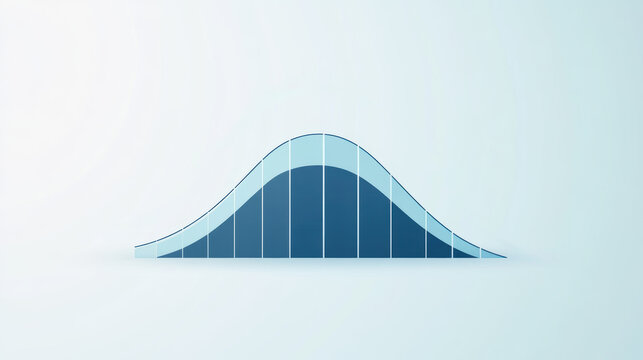
Personality traits are not neatly divided into separate groups - instead, they exist along a continuum. All personality traits are best understood as spectra, typically distributed in a bell curve. Binary systems force people near the average into an arbitrary category, so continuous scoring is more accurate.
No position on a trait is simply good or bad. Each fits some environments better than others, so the useful question is fit.
Personality traits can change (accordingly, the sociotype profile), even in adulthood. While they are not entirely fixed, they tend to be quite stable and strong over time, making significant changes challenging. That said, dramatic shifts - such as transitioning from being a complete introvert to a complete extravert, or vice versa, in a reasonable timeframe - are unlikely.
Purposeful personality change
Traits can shift over time, mostly through changes in habits, roles and relationships. A practical route is to define the change you want and build small, concrete habits toward it - broader trait shifts tend to follow. Because traits are continuous, small shifts can be measured over time. A type label would only change when a person crosses a boundary.
New addition
Spectra type
Often, a person is a mix of 2-3 standard socionics types. Introducing a compositional metatype system can bring clarity in personality profiling, as it considers the profile entirely and approach it more granularly, not just picking from 16 limited options. Which also provides no ambiguity, as it shows explicit, general, long-term, stable patterns and characteristic tendencies of an individual.
Problems with socionics subtypes:
- does not account for ambiversion (the most common position on many traits for most people);
- considers only a small set of symmetric variants;
- does not work well in practice (scientifically unquantifiable);
- creates unnecessary entities - rather than simply noting that someone has heightened Extraversion, it layers on an elaborate theory that still fails to capture that specific accentuation.
Strength-Value Spectra Notation (Short):
Core Spectra:
nTj, α
This system allows representations of 10,625+ personality combinations in a compact way. By using first 7 strongest dichotomies, which accounts on average for 80% of a contribution to the characteristic of the sociotype profile.
If a pole in a person is not prominent and lies near the center of a normal distribution (its value is less than 1/16 of the scale), it need not be included in the notation, as mentioning it serves no purpose.
If a pole in a person is notable (its value exceeds 1/16 of the scale), it makes sense to indicate it, denoted by a lowercase letter.
If a pole in a person is highly prominent (its value exceeds 1/4 of the scale), it should be emphasized, denoted by an uppercase letter.
New addition
Spectra relations
Utilizing the entire sociotype spectra of each person for relation calculation has much higher accuracy and predictability for real life applications. It is available on the comparison page of two results.
New concept
Personality adjustment protocols
Quantitative and reproducible methods of targeted personality adjustments.
Diagnostics
How to make personality diagnostics accurately
Personality traits are probabilistic: on average, a person high in Extraversion acts more extraverted than others, but not in every situation.
Day-to-day behavior varies, but a person’s long-run average is stable.
These average behavioral tendencies strongly correlate with the results obtained from personality questionnaires, which appear adept at capturing these general, stable patterns. Such questionnaires are particularly effective at identifying an individual's characteristic tendencies, even though their moment-to-moment behavior is influenced by situational factors and internal goals that shift in response to changing circumstances.
New revision
Innate/core type understanding
The idea may add some depth to the system, accounting for person's personality progress and adaptation vectors.
General notion is that a person is assigned to one of 16 types, which are unchangeable since birth, subtypes and accentuations reflect later changes. While this approach is clear, it might oversimplify current scientific understandings and developments.
There is a broader range of distinct characteristics, which hard to confine into 16 categories. By mapping a full broad continuum - from each individual's inborn core profile to their most current expression - we can capture every step of their psychological development and adaptation.
Definition of this innate or core type can be a highly-genetic set of characteristics, which is unlikely to change within one's lifetime, despite learning, system of values, attitudes, and will. On top of that we can have a highly-epigenetic, relatively flexible part of the psyche.
A: Sociotype (stable and unchangeable) → Subtype (stable and changeable) → ...
B: Genotype / Neurotype (stable and unchangeable) ← Sociotype (stable and changeable) ← Personal Adaptations
New concept
Settings, setting shifts, setting spectra
Individual personality is context-dependent and can vary across different settings. Each setting - whether slightly or significantly - shifts a person's personality profile in a particular direction. The sum of these shifts, averaged across individuals, can characterize the profile of a given setting.
Similarly, different organizations have their own settings, which influence their internal dynamics.
Settings can be divided into two categories: organic and curated. An organic setting is a natural environment where changes occur without prior preparation, simply influenced by the surroundings. A curated setting, by contrast, is deliberately adjusted to shift the sociotype in a specific way (for example, a revitalizing, innovative, or competitive setting).
Integration
Cybernetics
One of the fields that has significantly influenced socionics formation was cybernetics. And it is worth giving it more attention again, as it permeates many layers of the modern society, and might give insights, by going above personality into more fundamental evolutionary behavior patterns.
Cybernetics treats behavior as goal pursuit corrected by feedback, which fits the idea that a profile reflects both stable tendencies and the strategies a person has built around them.
Big Five
The Big Five is one the most scientifically robust frameworks in personality science, grounded in decades of research. During the 80s and 90s the field solidified around the consensus that five personality traits known as the Big Five could be well used to describe the major dimensions of personality. This is still the most widely used consensus system for personality traits in the field today. And its high compatibility with modern socionics - which not only enables easy and accurate derivation of a Big Five profile but also aligns with and even surpasses this mainstream consensus in a few scientific metrics - underscores the quality and scientific validity of this new quantitative framework.
The latest developments in Big Five, such as the introduction of Aspects (ten-factor system), indicate that in some sense 5 factors were not enough and a more complex system is preferable to view personality in a more granular way. Interestingly, some of these developments suggest that certain broader understandings present in socionics from its outset are now being examined more in personality psychology.
- Apophenia
- Fantasy/Absorption
- Aestheticism
- Innovation/Imagination
- Intellectual Engagement
- Intelligence
Examples of Aspects and Facets
Openness and Intellect Aspects
Openness/Intellect is commonly split into two aspects: Openness (sensory and aesthetic pattern-seeking) and Intellect (abstract reasoning). A balanced profile pairs pattern-seeking with the reasoning needed to check which patterns are real.
Apophenia Facet (Intuiting + Fine Resolution + Passionarism + Feeling)
The tendency to perceive meaningful patterns and causal connections where none in fact exist.
HiTOP
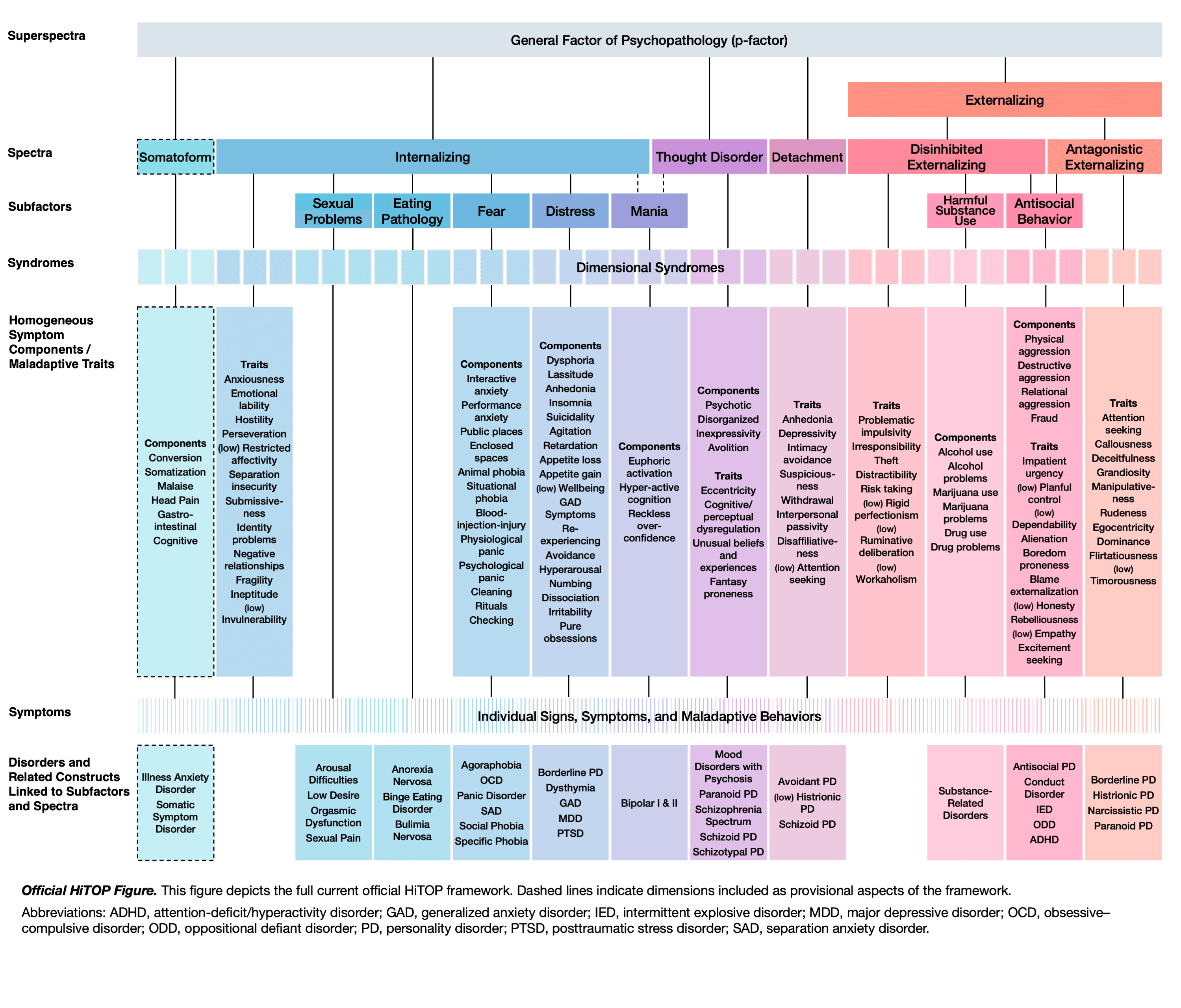
The Hierarchical Taxonomy of Psychopathology (HiTOP) is a modern, dimensional, evidence-based model that classifies mental disorders by symptom patterns, focusing on spectrums rather than rigid categories - an evolution from DSM/ICD, mirroring the shift from narrow older typologies to advanced frameworks.
HiTOP uses actual empirical data on patterns of symptoms - specifically, which symptoms tend to occur together - to describe the range of different symptoms associated with mental disorders. This approach groups symptoms based on real empirical evidence, rather than relying solely on tradition, medical intuition, or expert opinion that has accumulated over the past 100 years.
Quick Overview
Internalizing Spectrum: (~ Affective Gravity + Contextual Fluidity). General risk factor for mood disorders, anxiety, depression.
Thought Disorder Spectrum: (~ Intuiting).
Detachment Spectrum: (~ Introversion). Social withdrawal, low motivation, anhedonia.
Disinhibited Externalizing Spectrum: (~ Perceiving). Impulsivity, distractibility, poor self-regulation.
Antagonistic Externalizing Spectrum: (~ Antagonism + Holding Apart) Callousness, manipulativeness, entitlement.
Somatoform Spectrum: (~ + Judging + Contextual Fluidity + Feeling). Problems in which people have concerns and experiences relating to their body where there's no obvious physical dysfunction but they have feelings and worries and concerns about their physical well-being.
Personality dysfunction, rethinking mental illness and treatment
A comprehensive, cybernetic-evolutionary understanding of the psyche and personality, combined with advanced psychological frameworks, could offer new perspectives and potentially solve previously unsolvable problems.
In cybernetic terms, a person is a goal-seeking system that keeps comparing where it is with where it wants to be. Trouble starts when its usual goals, readings of events, or tactics stop working and it cannot come up with better ones. This persistent stall is what DeYoung and Krueger treat as the core of psychopathology.
Medication is not always the best fit, and non-drug approaches deserve more research. Lasting improvement usually involves finding workable goals and strategies and revisiting how situations and priorities are read.
New addition
Psychopathology factor
The inability to maintain stable goal pursuit is one of the main components of psychopathology.
The risk factor for psychopathology can be described using a formula:
p-factor ≈ Affective Gravity ± (Introversion/Extraversion) + Perceiving + Contextual Fluidity + Passionarism + Intuiting + Nonacceptance + Elaboration + Negative Focus
Assertion ET+Cen
Executive action network
DLPFC, ACC
Stability ITJ
Execution-Structure Circuit
Conscientiousness
Action-Opportunity Circuit
System-Harmony Circuit
Discovery-Harmony Circuit
Openness
Exploration ENP
Inhibition INF+Per
Social integration network
INS, TPJ
New concept
Psychopathology spectra
The way mental illness manifests - through an array of symptoms that tend to cluster together - mirrors the patterns seen in personality traits. The structure of psychopathology and the symptoms of mental illness closely parallel the structure of personality itself. In essence, mental disorders represent extremely dysfunctional manifestations of normal personality traits. Accordingly, it can also be presented as a distinct profile.
New concept
Ineffective adaptations, reconditioning
Some personality manifestations can act as ineffective adaptations to the environment. Identifying these points and addressing them might help a person switch to a more effective and healthy state.
New concept
Communicative therapies
One way to strengthen a function within yourself is to immerse yourself in an environment where others exhibit that function in their behavior - and then imitate them.
Cognition
Biological foundations, psyche-energy bridge
When we talk about a function being psychic energy, we're likely referring to the concept in which a connection between the more humanitarian side and the more scientific side becomes possible. This, in turn, offers a clearer understanding of what energy is.
Energy can be seen as arising from a difference in potential: a gradient between high and low concentration stores potential energy. In the brain, increased blood flow brings more oxygen and raises electrical potential.
On a more basic and physical level, it is the electrical activity of neurons in the cerebral cortex and the electrochemical tactility between them. This is what provides perception, the functioning of the psyche, at its most fundamental level. A bit higher up are instincts and reflexes, physiological needs related to survival and reproduction, which manifests through behavior. Then, there are the subjective forces of attraction and repulsion between people - living beings feel emotion. And there are dimensions of what could be, duration, cyclicity, and finally.
New concept
Dichotomy hierarchies
There are several implicit hierarchies in this framework that aren't explicitly defined, as well as some outdated ones that require reevaluation or supplementation. We can select different criteria and use them to sort these dimensions for various purposes.
~ Example 1 - Dimension Prevalence (how pronounced is it, on average)
1. Extraversion/Introversion
2. Thinking/Feeling
3. ...
15. Embedance/Disembedance
~ Example 2 - Dimension Plasticity (how easily changeable is it, on average)
1. Affective Gravity/Affective Buoyancy
2. ...
3. ...
New concept
Sociotype inheritance
Sociotype has a significant genetic component, meaning it is partially inheritable. Although the precise mechanisms remain unclear, inheritance likely follows nature's homeostatic principle.
Other
Political coordinates, left/right axis
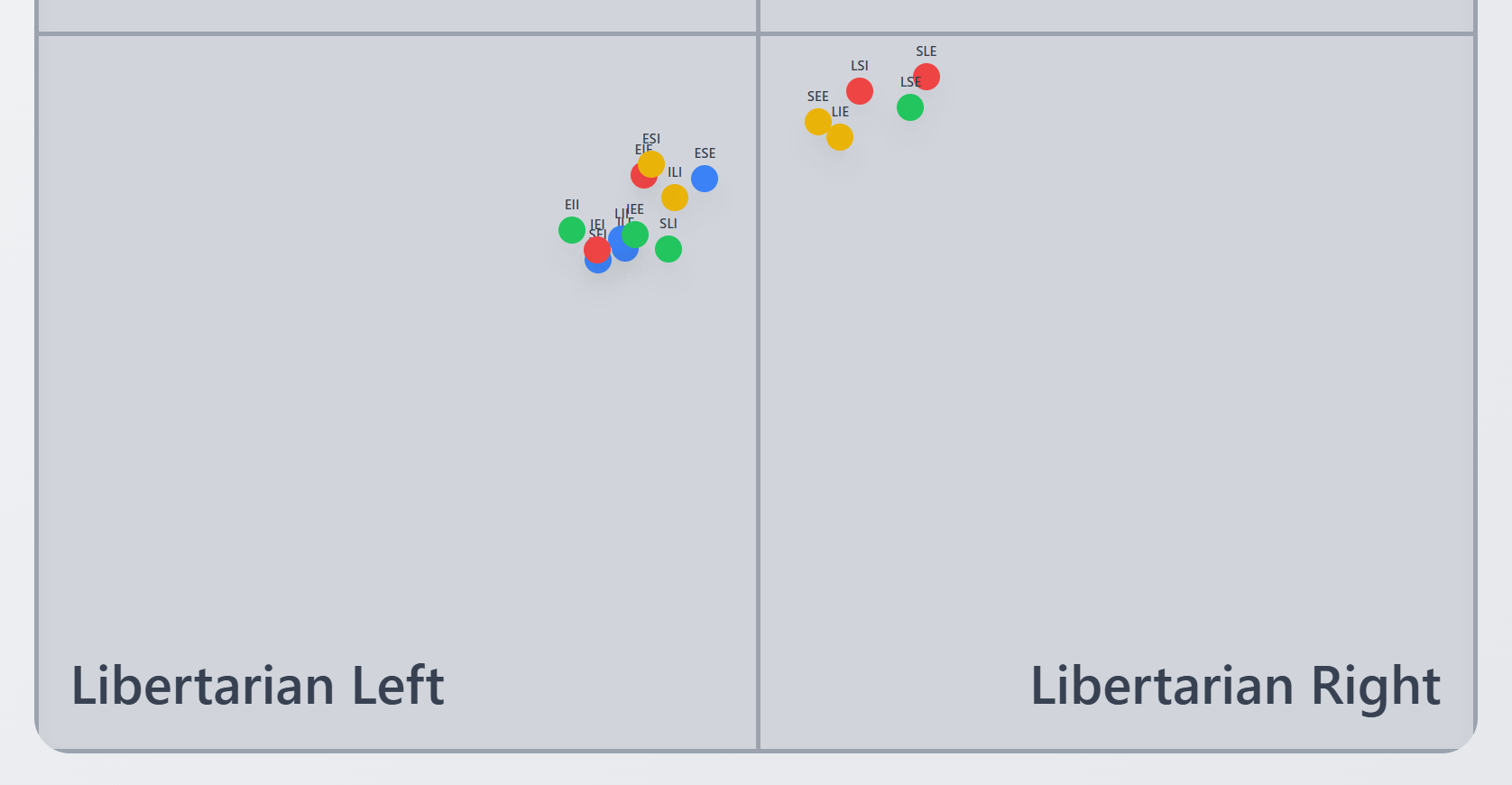 Average distribution on the political coordinates
INFP, Benevolism, Contextual Fluidity <-> ESTJ, Antagonism, Invariant Stability
Policy changes
The assessment can now be taken only once every 3 months.
Removed: Public Database.
Removed: 6 Additional Public Accuracy Metrics.
Removed: Behavior Prediction Tool.
Upcoming year themes
Psychology + Technology
PsyTech Economy, Self-Sustainability
Interdisciplinary Applications
Sociotype Development
Personality Science / Neuroscience
Personality-Optimized Flows
Directed Personality Adjustments
Digital Socion
Quantitative Models
Metatype Systems
Predictive Organizational Management
AI Real-time Diagnostics
Sociotype Agents
Synthetic Participants (Agent-reports)